
Middle East Studies
The Middle East Studies program is a hub for research and teaching about the region of the Middle East and North Africa (MENA)—past, present, and future. Our courses provide students with interdisciplinary training in the history, cultures, literatures, politics, languages, and religions of the MENA to prepare them for a variety of careers related to this significant region of the world. Our faculty lead exciting study abroad programs, giving students opportunities to gain firsthand experience in this complex, fascinating region and to develop broader intercultural understanding. In collaboration with the local community, our faculty also bring the diverse cultures and societies of the MENA directly to campus, organizing engaging, student-friendly activities, events, and guest speakers, as well as advanced research activities.
Program Overview
UT faculty in MEST promote educational programs and research related to the Middle East and North Africa (MENA) region, including a Middle East Studies BA degree, a Middle East Studies minor, lectures, student and community events, and conferences. MEST faculty are affiliated with programs and departments across UT’s campus including the Howard H. Baker School for Public Policy and Public Affairs, the Marco Institute for Medieval and Renaissance Studies, the Departments of History, World Languages and Cultures, Music, Political Science, Religious Studies, and the Fern and Manfred Steinfeld Program in Jewish Studies. Our goal is to make UT a regional leader in the study of the MENA by supporting faculty research, undergraduate and graduate education, community outreach, and professional training in relevant areas.
If you have any questions, please feel free to contact:
Professor Matt Buehler
Chair of Middle East Studies and Associate Professor of Political Science
University of Tennessee
[email protected]
Minors
If you’re interested in supplementing your primary field of study with knowledge of the Middle East, our minor would be a great fit.
Our program currently offers one minor:
- Middle East Studies minor
Scholarships
Arab American Club of Knoxville (AACK) Travel Scholarship: Eligible applicants include UT undergraduate and graduate students seeking to do study abroad, archeological digs, language study, internships, independent research, or other similar academic overseas travel in Arabic-speaking countries during the summer or academic year. Award amount is around $2000 for two scholarships.
Elain A. Evans Middle East Studies Scholarship: Eligible applicants include undergraduate students in a major in the College of Arts and Sciences with a program of study focusing on historical or contemporary aspects of the languages, cultures, or societies of the Middle East. Preference will be given for students wanting to use the monies as a travel scholarship to do study abroad or other overseas academic work in the Middle East and North Africa (MENA) region. Award amount is between $500 and $2000, depending on availability.
In past years, students have used these scholarships to travel to Jordan, Morocco, Mauritania and other countries of the Middle East. UT’s Jewish Studies program also offers travel scholarships for Israel and the future Frankel-Rickets Scholars in Israel Program for study abroad.
Why Study Middle East Studies?
The MEST program offers students interdisciplinary training in the history, cultures, literatures, politics, languages, and religions of the MENA region, preparing them for a wide range of careers related to this vital area of the world. Our faculty comes from diverse disciplines, including Political Science, History, Religious Studies, Literature, Jewish Studies, Classics and Archaeology, Arabic, Hebrew, and more. This diverse expertise provides students with a comprehensive understanding of the complex realities of the Middle East and North Africa.
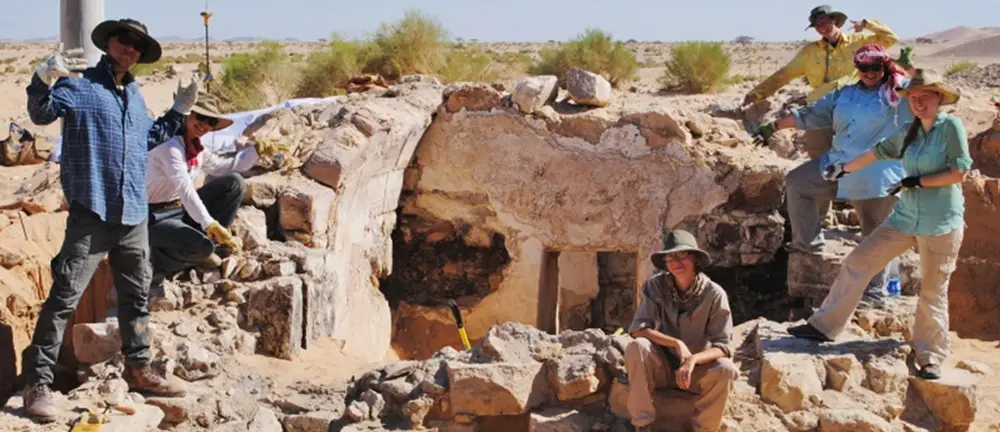
Students in the MEST program will not only develop a nuanced perspective on contemporary issues but will also explore their deep historical roots. Many of our faculty members have designed and led study abroad programs in countries such as Jordan, Morocco, and Israel, enhancing the learning experience. Looking ahead, the MEST program plans to launch additional study abroad opportunities, further enriching UT students’ transformative experiences in the MENA region.
What Can You Do with an BA in Middle East Studies After Graduation?
Students affiliated with the MEST program have pursued a diverse range of careers related to the Middle East and North Africa (MENA) region. Many have entered fields such as diplomacy, national security, foreign policy, cultural promotion, international business, journalism, refugee aid, and non-governmental organizations. Others are applying to Law School, Business School, or graduate programs to earn master’s or doctoral degrees in areas like Political Science, History, Religious Studies, and Arabic or Hebrew studies.
Often, students find that combining a MEST degree with a degree or minor in a traditional discipline makes their education more focused and meaningful. For instance, one student who earned both a general Political Science degree and a MEST degree developed expertise in international security issues specific to the MENA region.
Additionally, undergraduate and graduate students in the MEST program have received prestigious awards for Arabic language study, which have opened up further career and graduate opportunities. Notable recognitions include the National Security Education Program’s Boren Scholarships and Fellowships, the U.S. State Department’s Critical Language Scholarship, and the U.S. Department of Education’s Center for Arabic Study Abroad (CASA) fellowships.

Featured Courses
REST 225 Judaism, Christianity, and Islam
Introduces some of the historical relations of Judaism, Christianity, and Islam, with emphasis on the tradition that is the instructor’s research focus.
POLS/MEST 463 Politics and Power in the Middle East
Examines conflict and change in contemporary Middle East politics. Common topics include: Dictators, Islam, popular uprisings, democratic transitions, women’s rights, oil, terrorism, and ethnic/religious conflict.
POLS/MEST 465 Nuclear Politics of the Middle East: Conflict, Energy, and the Environment
Examines conflict and change in the contemporary nuclear politics of the Middle East. Topics include: the spread of nuclear weapons, nuclear nonproliferation treaties, illicit/secret nuclear programs, nuclear energy, nuclear security and inspections, and nuclear energy’s relationship with solar, wind, and oil energy.
ARAB/MEST 321 The Israeli-Palestinian Conflict in Literature Film, and Popular Culture
Examines cultural representations of the Israeli-Palestinian conflict, including literature, film, and music, and introduces students to relevant political and historical context. Taught in English.
Complementary Majors, Minors, and Certificates
Looking to enhance your degree? Consider these programs as a complement to your primary major.
Students often discover that combining a MEST degree with a degree or minor in a traditional discipline enhances the focus and significance of their education. For example, one student who earned a general Political Science degree alongside a MEST degree developed expertise in international security issues specific to the MENA region. Similarly, other students pursuing a Religious Studies degree become specialists in Middle Eastern religious traditions by double-majoring or minoring in the MEST program.
The MEST program has also welcomed students from outside the College of Arts and Sciences who pursue a MEST double major or minor. For example, one student recently earned a degree in Finance and plans to work in Dubai or elsewhere in the Persian Gulf. In this case, the MEST degree enhances his cultural understanding and Arabic language skills, making him better equipped for success in that business environment.
The MEST program has also attracted students with degrees in Logistics or Computer Science who choose to pursue a MEST double major or minor due to their family ties to the MENA region. These students are eager to explore and deepen their understanding of their cultural identity and heritage, and often to improve their Arabic or Hebrew language skills.
Study Abroad
Ashley Campagne in Morocco
Hadiya Javed in Jordan
Matt Jones in Jordan
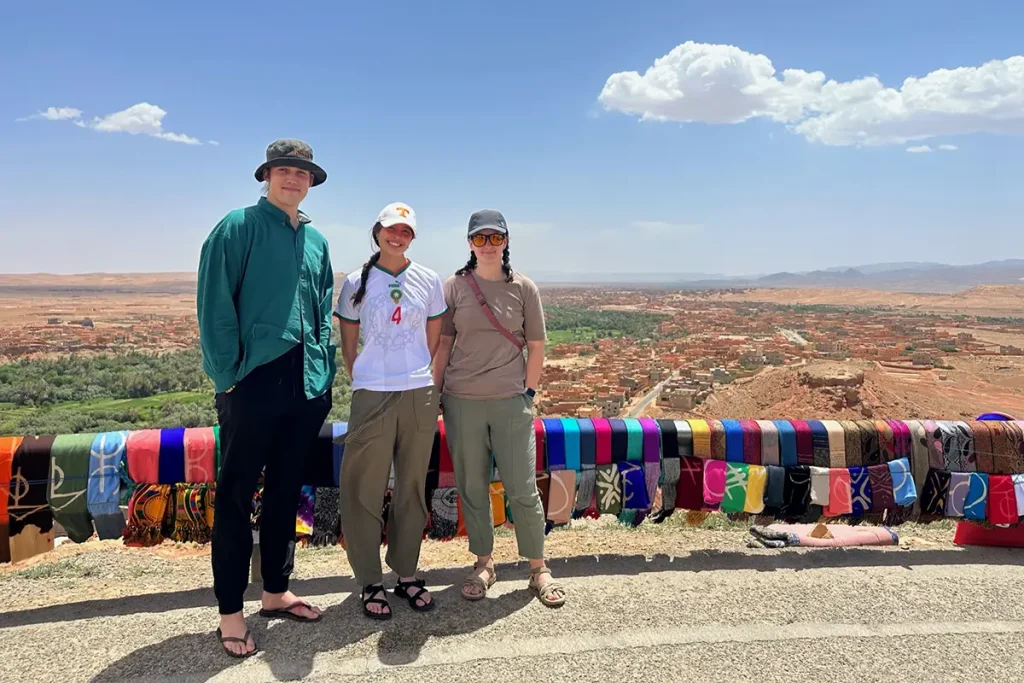
Elliott Fesler in Morocco
Greg Jordan in Mauritania
“As an undergraduate at the University of Tennessee, I began my involvement with the MEST program by taking Arabic classes. I quickly fell in love with the language and the rich culture of the Arab world, which sparked my desire to understand the complex issues facing the region. This passion motivated me to pursue a Ph.D. in Political Science at UT, specializing in contemporary Middle East politics, with the goal of becoming a Foreign Service Officer in the U.S. State Department. For the past two years, I have been studying advanced Arabic in Jordan through the U.S. Department of Education’s Center for Arabic Study Abroad (CASA).”
CALISTA BOYD

Looking For More Options?
The College of Arts and Sciences offers students the broadest range of academic programs and opportunities for research and creative activities at the University of Tennessee, powered by faculty expertise across every discipline.

Admissions and Aid
Are you ready to become a Vol? Learn how to apply and explore tuition, cost, and aid below.

“The MEST program and its faculty have significantly enhanced my exposure to and appreciation for non-American cultures, particularly those of the Middle East and North Africa. My study of Arabic within my MEST major, combined with my experience studying abroad in Morocco, has inspired me to pursue graduate work in Middle East Studies. Ultimately, I aspire to become a university professor researching Near Eastern Christianity—a career dedicated to deepening my understanding of the region’s religious heritage.”
ELLIOTT FESLER

Request Information
Want to join us in creating what’s next? Learn more about the Interdisciplinary Programs, BA in Middle East Studies and become a Vol-in-Progress!