
Interdisciplinary Programs, BA
Our Interdisciplinary Programs, BA serves as a unique hub for students to explore a single field of study from a variety of perspectives.
You’ll learn about cultures, societies, science, and technology through coursework in the natural sciences, art, literature, philosophy, psychology, and so much more. With a Bachelor of Arts in Interdisciplinary Programs, you’ll learn to bridge the gaps between fields, tackle urgent challenges, and connect dots others don’t even see.

Concentrations

Africana Studies, BA
The Interdisciplinary Programs, BA in Africana Studies teaches students about the diversity of the African Diaspora—its history, culture, and literature. Courses emphasize critical thinking and inquiry around topics like crime, environmental justice, music and culture, race and society, health, as well as prominent African American intellectual thinkers. This program provides students with interdisciplinary knowledge of the Black experience, equipping them for careers in advocacy, human services, social work, and even policy advising.

Animal Behavior, BA*
*minor option available
With an Interdisciplinary Programs, BA in Animal Behavior, you’ll gain a broad and integrated understanding of why animals behave the way they do while building skills that prepare you for many career paths. You’ll develop skills in critical thinking, scientific writing, teamwork, and the ability to design and test ideas—skills valuable for research, conservation, animal care, education, and more.
At UT, you’ll join one of only a few Animal Behavior programs offered at a research-intensive (R1) university in the entire country. Our program brings together courses from biology, psychology, animal science, neuroscience, and other disciplines to help you explore the amazing diversity of animal life.
Animal Behavior, BS*
*minor option available
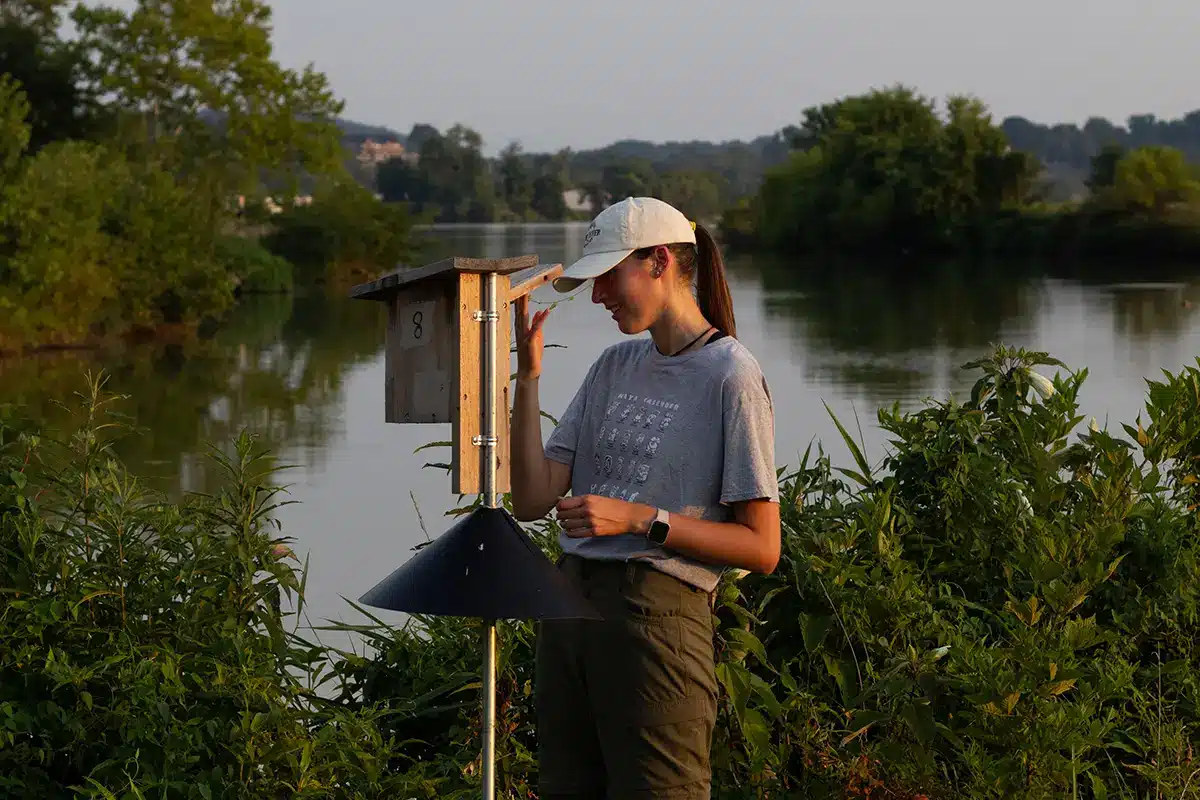
The Interdisciplinary Programs, BS in Animal Behavior equips students with specialized knowledge in ecology and evolutionary biology; psychology; biochemistry and cellular and molecular biology; as well as anthropology, providing a solid natural science foundation for understanding animal behavior, evolution, and adaptation. The BS degree is a great fit for students hoping to enter careers in the sciences, such as working in zoos, becoming veterinarians, or even working in research and wildlife conservation.

Computational Social Science, BA*
*certificate and minor option available
Computational Social Science involves analysis of human social and behavioral and data to find underlying patterns and address contemporary challenges.
Students studying social and behavioral sciences gain a huge advantage by with a minor in computational social science. As societies generate vast amounts of digital data, this rapidly growing set of skills is being used to improve quality of life, inform science and innovation, and facilitate well-informed civic engagement. Applications range from public health to socioeconomic disparities, to sports statistics, social media analysis, marketing and the study of technological or popular trends.

Health Science Data Analytics, BA
The Health Science Data Analytics program prepares students to use mathematical and statistical methods in the field of healthcare. Students will learn data visualization techniques, statistical and regression modeling, and how to analyze and interpret data for use in biomedical contexts. This might include learning how medical devices interpret and convey information about the body or even using artificial intelligence and machine learning to quantify and interpret health data.

Integrated Studies of Arts and Sciences, BA
The Integrated Studies of Arts and Sciences program lets students explore various disciplines—from the social sciences, natural sciences and math, to the arts and humanities. Instead of one area of study, students select any three minors in the College of Arts and Sciences, developing a unique, personal, interdisciplinary curriculum, and skill set. This program prepares students for a range of careers where integrated knowledge is valued including project management, business, marketing, communications, and public policy.
Jewish Studies, BA*
*minor option available
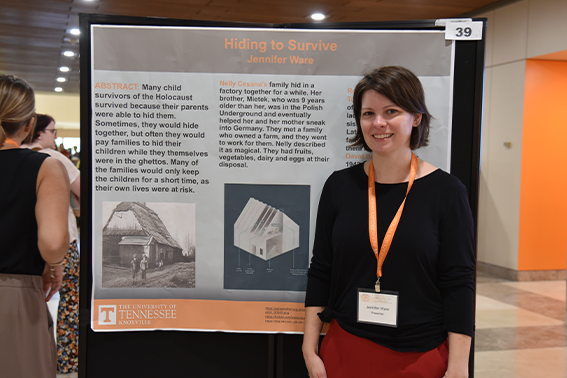
The Jewish Studies program at UT offers an interdisciplinary and globally relevant education that explores Jewish history, culture, philosophy, religion, and language. Students gain a broad perspective on Judaism’s historical evolution and contemporary relevance, engaging with topics such as the Holocaust, the Jewish textual tradition, and the Middle East.
With small class sizes, renowned faculty, and hands-on learning experiences, the program prepares students to analyze complex global issues, understand religious and cultural diversity, and develop strong research and communication skills.
Latin American, Caribbean, and Latinx Studies, BA*
*minor option available
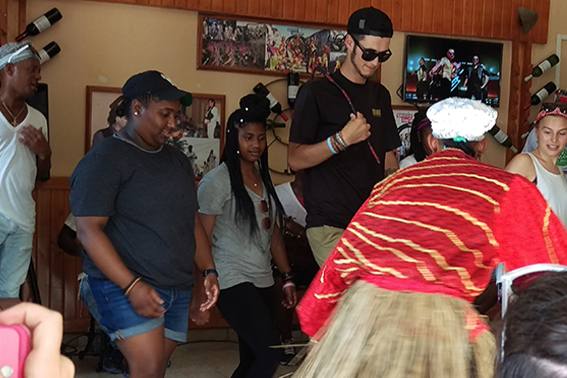
The Latin American, Caribbean, and Latinx Studies Program offers an interdisciplinary approach to understanding the region’s diversity through a study of its rich political, social and cultural traditions as well as its natural environments and geography.
The goals of the LACS program are to educate students and the wider campus community about the diversity and complexities of one of the world’s most vibrant regions. Students who major or minor in LACS will have access to a comprehensive and interdisciplinary curriculum that weaves together cultural traditions, regional languages, political systems, and societal and environmental issues. The program offers a deep understanding of how historical legacies and contemporary dynamics shape Latin America and the Caribbean, preparing students for impactful careers in international relations, cultural exchange, public policy, and more.

Linguistics, BA*
*minor option available
Linguistics is the scientific study of language systems and how they work. It includes both the systematic investigation of the properties of particular languages as well as the characteristics of language in general. The Linguistics program offers a broad exposure to the various areas of linguistics, including historical, descriptive, theoretical, and applied linguistics, along with an opportunity to study fields where linguistics overlaps with other disciplines such as psychology, sociology, education, speech pathology and the like. It is designed to prepare students for graduate work in linguistics or related areas, or to serve as an enrichment to the study of a particular language. It also provides an excellent background for those interested in teaching English as a second language. Graduates of our program have entered a variety of language-related and applied professional fields, such as translation, language teaching, publishing, journalism, speech pathology, forensics, tech industry, as well as continuing their study of linguistics at the graduate level.
Medieval and Renaissance Studies, BA*
*minor option available
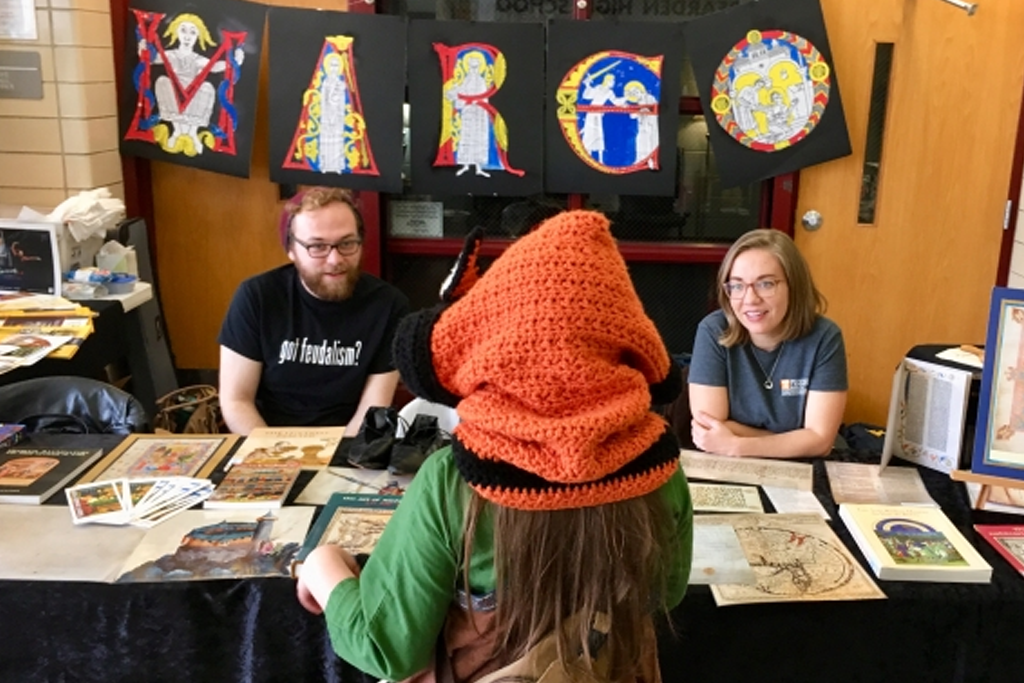
The Marco Institute is a highly regarded center for studying the history and culture of the premodern world, from 300 to 1700 C.E.
Our interdisciplinary program allows students to explore events and cultures from this rich period through courses offered by over 40 faculty members in eight departments. We examine developments in Europe, the Middle East, Southeast Asia, the Americas, and the Mediterranean, through disciplines like architecture, art history, archaeology, literature, music, and political science. Students can focus on the eras and methods that interest them most.
MRST students and faculty engage with the past to better understand our interconnected world. Graduates leave with a well-rounded knowledge of medieval and Renaissance societies and skills valued in today’s job market, including cultural and historical awareness.
Middle East Studies, BA*
*minor option available
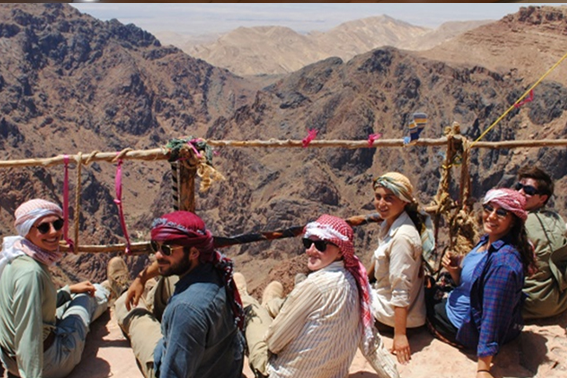
The Middle East Studies program is a hub for research and teaching about the region of the Middle East and North Africa (MENA)—past, present, and future. Our courses provide students with interdisciplinary training in the history, cultures, literatures, politics, languages, and religions of the MENA to prepare them for a variety of careers related to this significant region of the world. Our faculty lead exciting study abroad programs, giving students opportunities to gain firsthand experience in this complex, fascinating region and to develop broader intercultural understanding. In collaboration with the local community, our faculty also bring the diverse cultures and societies of the MENA directly to campus, organizing engaging, student-friendly activities, events, and guest speakers, as well as advanced research activities.

Visual and Interactive Storytelling, BA
The Visual and Interactive Storytelling Program (VIS) offers students the opportunity to develop storytelling skills with classes in animation, creative writing, video game art, sound design, performance, filmmaking, and more. Students learn and experiment with contemporary narrative tools and practices.
Visual and Interactive Storytelling students gain hands-on experience with digital creation, media production, and performance. The curriculum connects courses in literature, art, cinema studies, and theatre, combining theory with practice in collaborative projects.
Women, Gender, and Sexuality, BA*
*three minor options available
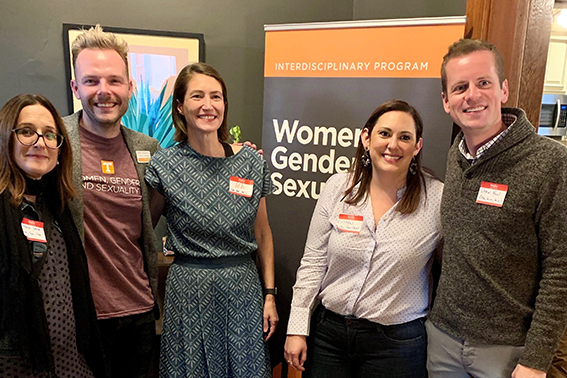
WGS is a dynamic and cutting-edge program centered on the study of gender and sexuality in human society and is designed to prepare students for thoughtful and active participation in their communities and workplaces.
The program in Women, Gender, and Sexuality is designed for UT students who want to expand their worldview while preparing for innovative careers. WGS faculty members come from Psychology, English, History, Nursing, Political Science, and other disciplines, creating the perfect home for students who want to take classes in subjects across the university. Our graduates attend medical school, earn spots at top law schools and postgraduate programs, work at national nonprofits, teach in various educational contexts, and build careers in diverse fields. We welcome any student who seeks to better understand the world around them.
Looking For More Options?
The College of Arts and Sciences offers students the broadest range of academic programs and opportunities for research and creative activities at the University of Tennessee, powered by faculty expertise across every discipline.

Admissions and Aid
Are you ready to become a Vol? Learn how to apply and explore tuition, cost, and aid below.

Request Information
Want to join us in creating what’s next? Learn more about the Interdisciplinary Programs, BA and become a Vol-in-Progress!