
Research & Creative Activity
-

Symposium Features Undergraduate Research
The Arts and Sciences Undergraduate Research Symposium (ASUReS) provides a venue for undergraduate students across all disciplines in the college to showcase their research and creative achievements in individual or group projects or their contributions to class capstone projects. ASUReS, pronounced “azures,” offers an opportunity for research Vols to gain experience in delivering professional presentations…
-

Microbial Manners on the High Seas
Sargasso Sea plankton and other marine microbes take turns sharing nutrients. A new study co-authored by Steven Wilhelm, Kenneth and Blaire Mossman Professor in microbiology; Joshua Weitz, mathematical modeling professor at the University of Maryland; and team found that microbes in the Sargasso Sea divide nutrients throughout their communities over time, supporting coexistence and efficient…
-

Choice Overload
Does it get overwhelming? UT faculty team investigates how animals react to overwhelming options. Humans can have a lot to consider when working out the best choices for their needs: buying a car, choosing a home, or just shopping for groceries. An overwhelming number of options can give a person pause. Animals experience this same…
-
Monteith Lab tracks immune response
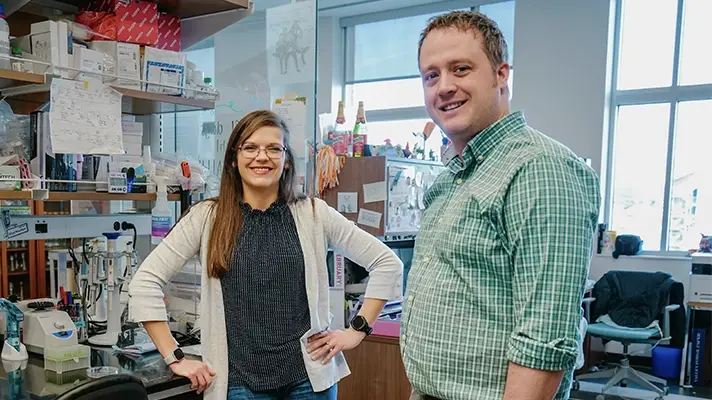
Assistant Professor Andrew Monteith’s lab in the Department of Microbiology is documenting how key immune cells detect infection and how that fails to happen in people with lupus. Research Associate Ashley Wise led a study focused on neutrophils, the most abundant type of immune cell, and how their mitochondria function as sensory organelles to detect…
-
Huang Named Fellow of Mineralogical Society
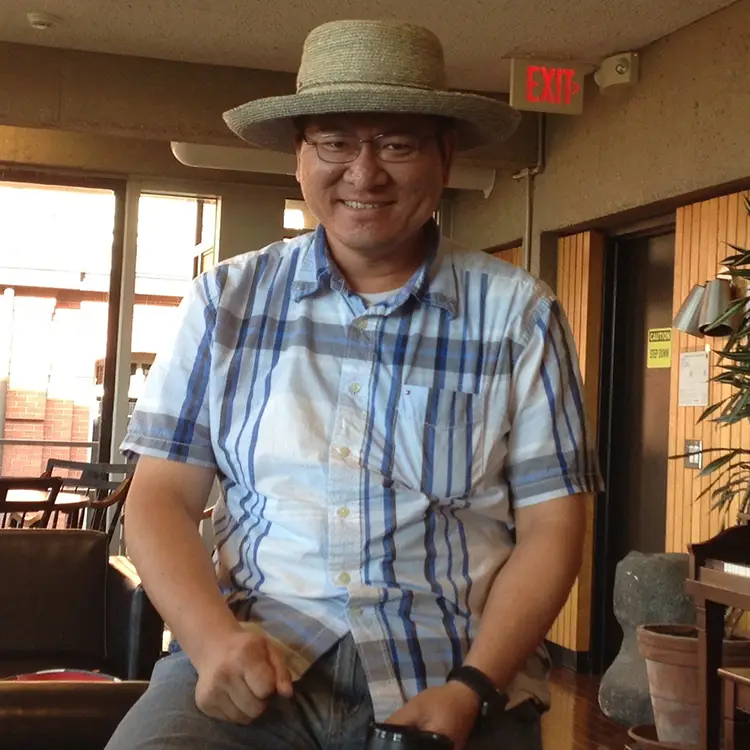
A Vol researcher who studies the geochemistry of rocks and meteorites to understand the deep interior of Earth and the early history of our solar system has been named a Fellow of the Mineralogical Society of America (MSA). Shichun Huang, the Gerald D. Sisk Associate Professor in the Department of Earth, Environmental, and Planetary Sciences,…
-
Factions Unite in Ukraine
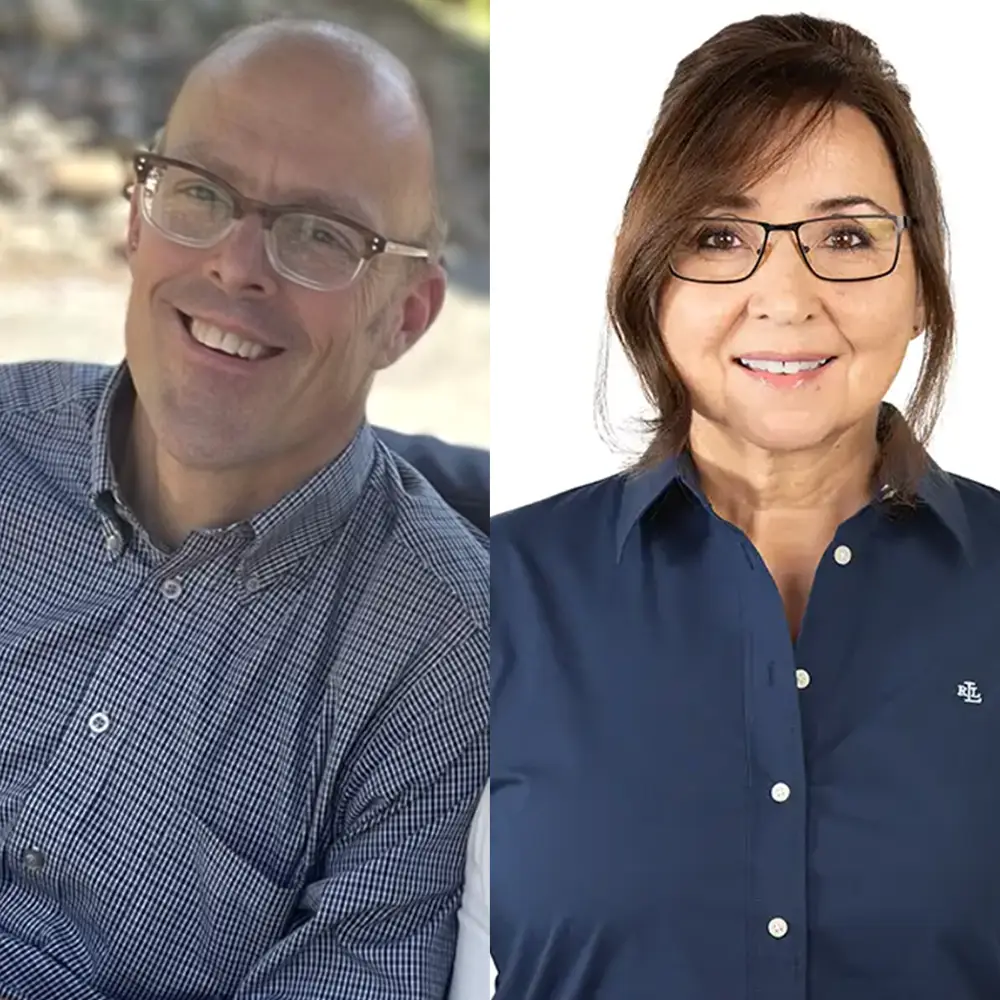
Data-driven research by UT faculty shows the dramatic shift in Ukrainian attitudes after invasion. A new study published by an interdisciplinary team of Tennessee researchers sheds light onto the dynamics of national unity experienced by Ukrainians following the 2022 Russian invasion. While a nation would be expected to rally against an aggressive foreign army crossing…
-

Mikucki Digs Deep for Space-Bound Microbiology
The smallest Earth-bound organisms can inspire technology that will someday reach far across the solar system in the search for extraterrestrial life. UT Microbiology Professor Jill Mikucki studies how microbial life forms interact with their environments—and helps fellow scientists and engineers test the tools to detect the microbial impact throughout entire ecosystems. Mikucki’s field work…
-
UT Team Studies Legal Aid in Knox County Evictions
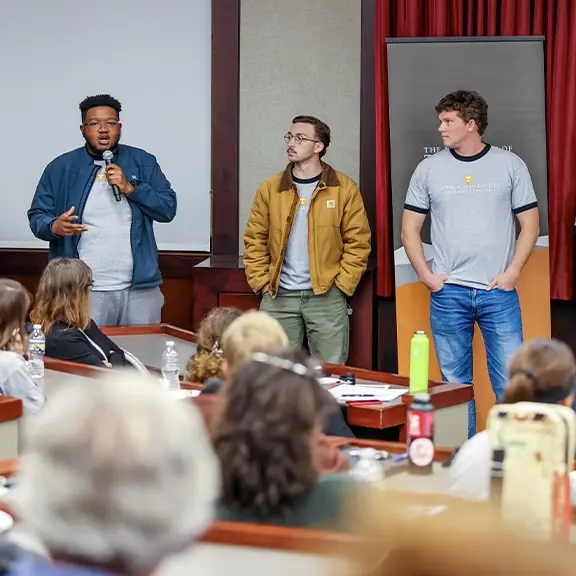
The Russell Sage Foundation (RSF) has awarded UT’s Appalachian Justice Research Center (AJRC) a $74,800 grant to support its study of a legal aid program for tenants facing evictions in Knox County. Amid rising rents and evictions, Knox County increased the availability of counsel at various stages of the eviction process in late 2023, through…
-

New UT Institute Leads Climate Studies for Community Concerns
The Institute for Climate and Community Resilience (ICCR) launched in July 2024 along with a set of new collaborative research initiatives for the UT College of Arts and Sciences and partners across the university. The ICCR builds on the skills and expertise of UT faculty to advance climate science and create equitable solutions for climate…