
Natural Sciences & Mathematics
-

Rats! Science Redefines Social Media Sensation
The rodent that caused a sidewalk impression known as the “Chicago Rat Hole” likely was a squirrel, according to a UT animal researcher and his colleagues. An imprint of a rodent in concrete is more than a meme to an animal researcher from the University of Tennessee, Knoxville, and his collaborators. By investigating photos of…
-
New Program to Enhance Grad Student Career Readiness
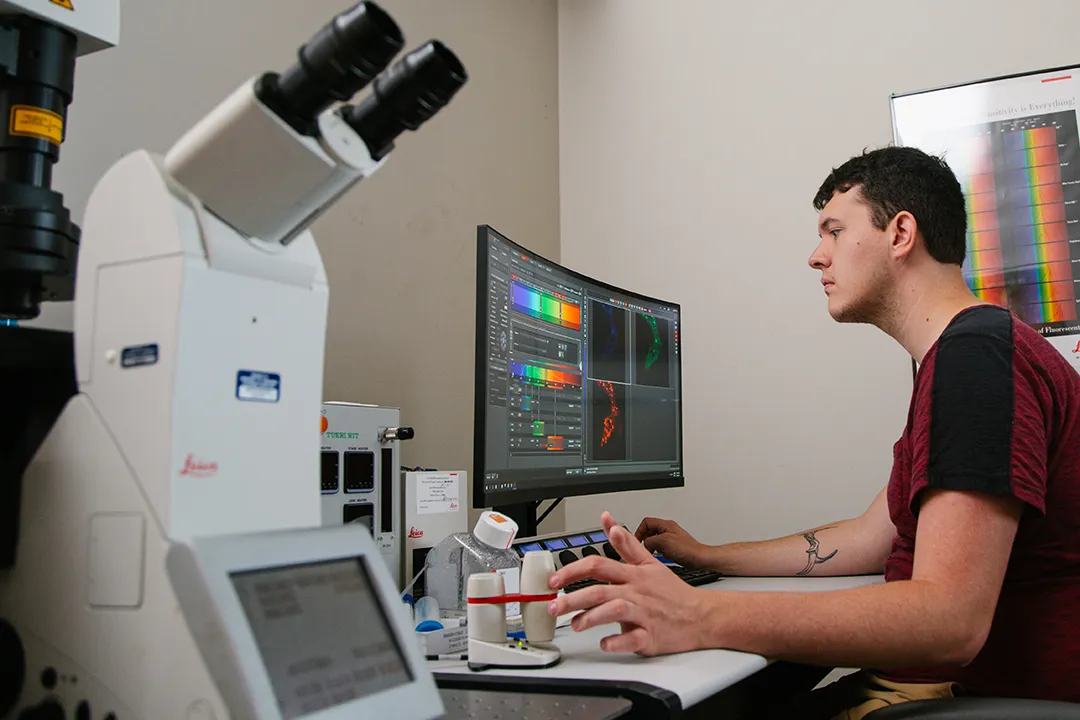
Graduate student training program in sciences and math gets a boost from the National Science Foundation. The National Science Foundation has awarded a grant of $399,209 to Division of Natural Sciences and Mathematics (NSM) faculty to develop and implement a holistic disciplinary training program for first-year graduate students that enhances research, teaching, and leadership skills,…
-

Burghardt Paper Earns Biosemiotics Award
Burghardt paper on interpreting animal behavior earns Biosemiotics Award for 2024. Professor Emeritus Gordon Burghardt received the 2024 Biosemiotics Achievement Award for his contribution to a special issue of Biosemiotics, titled “Jakob von Uexküll, heterophenomenology, and behavior systems I: Core ethology and Merleau-Ponty.” In the special issue, Umwelt Theory and Phenomenology, Burghardt’s winning paper compares…
-

Scholar Spotlight: Anner Paldor
“I use computer models to predict the hidden underground flow of water, especially in terms of how it interacts with rivers, lakes, and the ocean.” Anner PaldorAssistant ProfessorDepartment of Earth, Environmental, and Planetary Sciences My research seeks to elucidate the dynamics of groundwater interactions with surface water bodies, and to better predict how these dynamics…
-

Multi-Lab Collaboration Unites Math and Biology
Researchers from math and molecular biology collaborate for a new analysis method. Photo by Erik Campos An interdisciplinary team of University of Tennessee researchers recently published in Biophysical Journal on their development of a new statistical method that improves analysis in single-molecule fluorescence experiments, which are used to study important protein complexes in cells. The…
-

Chemistry Faculty Presents Machine Learning in Switzerland
Vogiatzis leads international workshop in computational catalysis and machine learning. Associate Professor Konstantinos Vogiatzis, Department of Chemistry, received a senior fellowship for 2024–2025 from Collegium Helveticum, a Swiss institute for advanced study. The fellowship is supported by ETH Zurich, the University of Zurich, and the Zurich University of the Arts. As part of the fellowship,…
-
Scholar Spotlight: Zachary Burcham
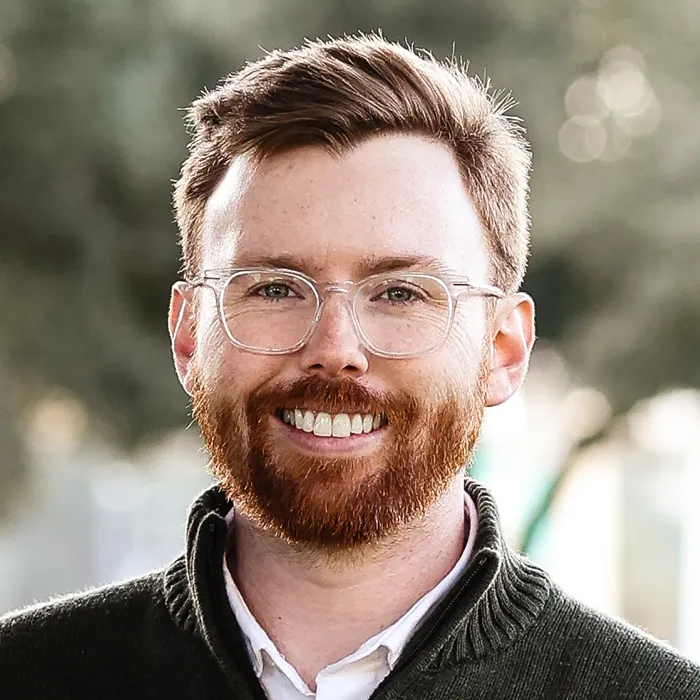
“I study tiny organisms—like bacteria living in mammals, insects, and soil that eat dead things and waste products—to understand how they can help us break down our wastes or clean up pollution.” Zachary BurchamAssistant ProfessorDepartment of Microbiology My research focuses on microbial community dynamics using computational and lab-based approaches to understand how microbes interact with…
-

‘Earth System Engineering’ Examines Impact of Life
An international team including UT Professor Alycia Stigall offers a new way to examine the long-term impact of humans and other living organisms on the planet. An international team including a professor from the University of Tennessee, Knoxville, has developed a new approach for understanding how living organisms—including modern humans—fundamentally change Earth’s ecosystems. The researchers…
-
Primate Research Reveals Unexpected Insight on Grip
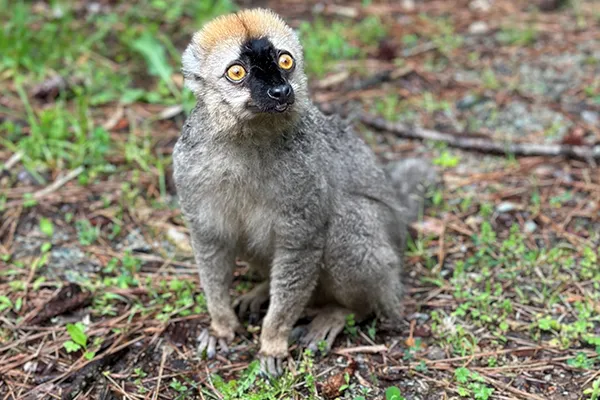
A study by UT Assistant Professor Michael Granatosky suggests species such as lemurs evolved grasping hands and feet for versatility rather than strength. New research led by Assistant Professor Michael Granatosky suggests some primates’ hands and feet are built for versatility, not just strength to grip branches as they move through trees. Although lemurs and…
-

Vol Impact: 2025 Alumni and Philanthropy Awards
Group Photo 2025 Alumni and Philanthropy Awards. Left to right: Dan Ricketts, Steve Frankel, Margie Nichols Gill, Interim Executive Dean Robert Hinde, Todd Metcalf, and Mike Dennis. The 2025 Alumni and Philanthropy Awards honor dedicated Vols whose support and service dedication help maintain the College of Arts and Sciences advantage. The UT College of Arts…