
Sorting Social Complexity

Center for the Dynamics of Social Complexity evolves with society.
UT’s Center for the Dynamics of Social Complexity (DySoC) brings together researchers from across disciplines and around the world to investigate the human behaviors and social interactions that lead to discovery and transformation in societies. The center’s members and affiliates use computational social science, social psychology, anthropology, artificial intelligence, and information science to examine the cultural evolution of knowledge, innovation, and society.
As society evolves, so does the center’s focus to keep in step with shifting dynamics.
“While DySoC remains anchored in cultural evolution, as it has been for the past decade, its mission has expanded toward computational studies of cultural evolution in mixed populations of humans and intelligent machines,” said Professor Alex Bentley, director of the center and of the related Computational Social Science undergraduate program.
Webinars presented by DySoC in its 2025–2026 schedule feature talks on empathy in large language models (LLMs) and LLM-driven art competitions. In his talk scheduled for February 2026, University of London Professor Andrea Baronchelli will discuss how social conventions emerge spontaneously among interacting populations of humans and AI. In addition to representing the expanding focus of the center, the webinar is also an example of DySoC’s international scope of scholarship.
“The international webinar format has been transformative, allowing us to feature a truly global lineup of speakers and attract audiences from institutions around the world, especially in Europe,” said Bentley. “These events have already sparked new collaborations for DySoC members.”
Dynamic Connections at Home and Abroad
DySoC collaborations have produced numerous publications in the last year and led to success in securing seed funding from the UT Office of Research, Innovation and Economic Development (ORIED) in support of its interdisciplinary research.
In one current project, the center engages with the Information Integrity Institute in the UT College of Communication and Information (CCI) on a statewide survey examining Tennesseans’ knowledge and opinions about the growing link between data centers and small modular nuclear power plants.
“Our research examines how everyday people understand the relationship between advances in artificial intelligence and the future of nuclear energy,” said DySoC member Catherine Luther, the Minnie Doty Goddard Distinguished Professor in the School of Journalism and Media and director of the Information Integrity Institute. “As AI’s energy demands continue to rise, it is increasingly important to understand how the public views nuclear power as an energy source—and how these perceptions may shape, or be shaped by, their attitudes toward AI.”
The project concentrates on public opinion in Tennessee with plans to expand the work to national and international contexts.
“This community-engaged research will help identify the opportunities and challenges these developments pose for local economies and communities,” said Bentley.
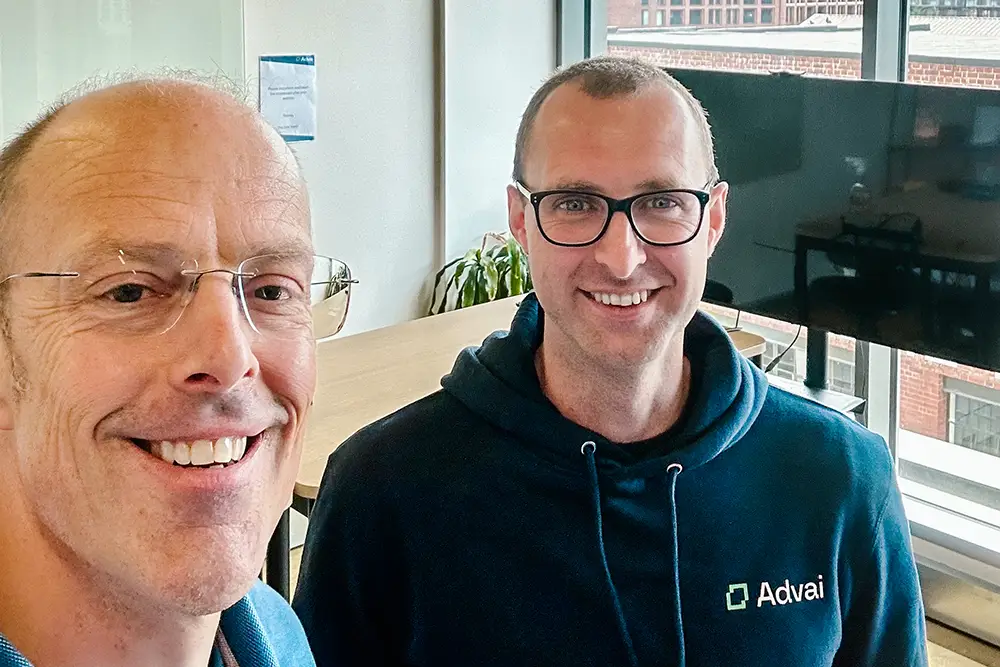
Another exciting new partnership is with Advai Ltd., a London-based company focused on AI adoption and LLM alignment for government and industry. Advai has committed a portion of its research time to collaborate with DySoC.
“DySoC is organizing a summit on LLM cognition in London in 2026, with research partners from UT, Barcelona, the United Kingdom, and France,” said Bentley. “On another topic, we’re in discussion with the Denbo Center for Humanities and the Arts and a game design company about the inclusion of archaeological reality into games set in the ancient past.”
DySoC Team Grows
Bentley looks forward to adding to the center’s continued growth with two new strategic roles. DySoC was instrumental in a finalist proposal to recruit a leading AI-language researcher as a next-level faculty hire for the CCI School of Information Sciences.
“This scholar will be an outstanding new member of DySoC on the Knoxville campus,” said Bentley.
DySoC will also add its first postdoctoral fellow this year.
“The top two postdoctoral candidates will visit Knoxville early this year to give research talks and meet with DySoC-affiliated faculty and students,” said Bentley. “One of our top priorities is to ensure that this new fellow receives strong intellectual, social, and material support to thrive in our interdisciplinary environment.”
By Randall Brown