
McDonald Family Endowments Add Professorships
Alumni share geologic passion through new endowed professorships.
Alumni David and Barbara McDonald established two endowed professorships that support new faculty members specializing in critical minerals and energy in the Department of Earth, Environmental, and Planetary Sciences (EEPS).
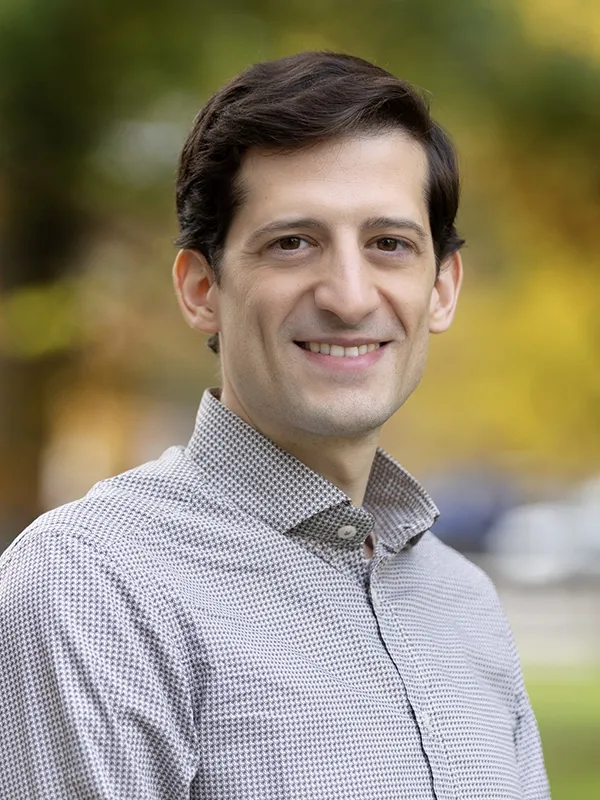
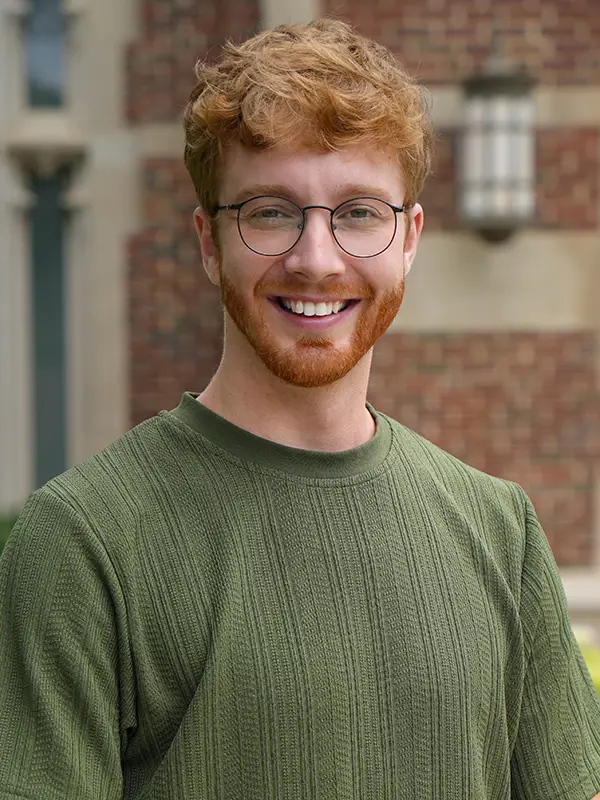
Assistant Professor Manuel Scharrer began in August 2025 as the David McDonald Endowed Professor in Critical Minerals. Assistant Professor Lluís Saló-Salgado joined the college in January 2026 as the Barbara McDonald Endowed Professor in Energy Transition.
McDonald (MS, Geology ’86) built his career largely in energy-related areas of the petroleum industry, with expertise and research in petroleum geology, business, and national security.
“When David learned that EEPS was planning to hire tenure line faculty in critical minerals and energy transition, he was excited about the direction the department was moving,” said Alycia Stigall, department head and Jones/Bibee Professor in EEPS. “He and his family wanted to help build a world-class research program here at UT in areas essential for advancing our society and country.”
McDonald maintained a passion for energy and economic geology while holding leadership roles in higher education and industry. He retired as a vice president at Noble Energy and serves as overseer at Stanford University’s Hoover Institution.
“When I completed my MS thesis in 1986, the US mining industry was in decline and all commodity prices were low,” said McDonald. “I now want to help UT prepare students to broaden our nation’s energy sources and help rebuild our critical mineral capabilities.”
New Faculty Bring Strong Backgrounds
The new faculty members’ focus areas add rich expertise to earth sciences research and teaching in the EEPS department.
“Manuel and Lluís are both outstanding early career scientists with extraordinary potential to move their respective fields forward,” said Stigall. “They rose to the top of their respective searches among very talented and competitive pools of candidates.”
Scharrer began working in his position on August 1, 2025, and is already making a positive difference. This fall he laid the groundwork for developing a world-class research facility to investigate the formation of ore-minerals—critical for modern economic development.
“Hands-on research experiences had a big impact on me during my own studies, and the McDonald Endowment allows me to give that same opportunity to my students in the field of critical minerals,” said Sharrer. “It supports undergraduates in developing curiosity and valuable laboratory and geological skills, helps cover some operating costs of geochemical and thermodynamic equipment, and provides seed funding for new and innovative projects.”
Saló-Salgado started his role on January 1. He explores movement of geofluids in the subsurface and how this movement is impacted by faults and other structures. His research is essential for developing hydrothermal energy, carbon sequestration, and understanding water movement.
“I am extremely grateful for this generous endowment from the McDonald family,” said Saló-Salgado. “Their support will open new research opportunities for students interested in energy and the crucial role of geoscience in advancing the deployment of technologies such as geologic carbon dioxide sequestration, geothermal energy, and hydrogen energy.”
The endowment support helps position EEPS and UT at the forefront of impactful research in understanding how critical minerals and materials form.
“Lluís’s research, like Manuel’s, combines experimental work with intensive computational modelling to really elevate our understanding of these important processes and significantly advance the field,” said Stigall. “We are so incredibly grateful for this transformative gift from the McDonalds, which will allow these incredibly talented early career scientists to explore, innovate, and train the next generation of scientists while advancing their research programs, our department, and our university.”
by Randall Brown