
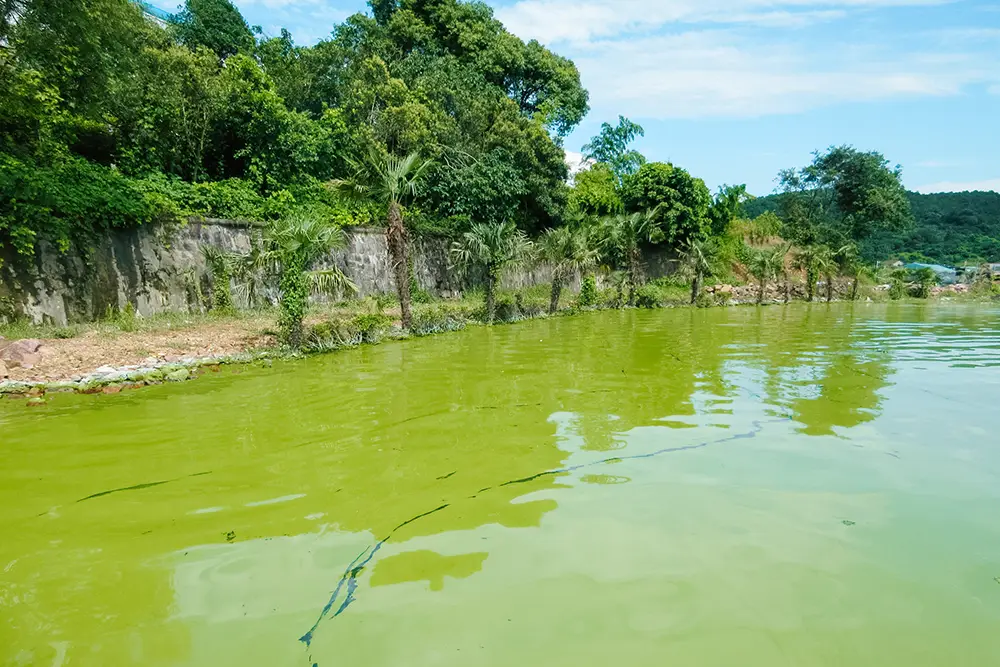
UT microbiology research into cyanobacterial blooms reveals that colonies take on metabolic functions and resistance to viruses.
An international team of researchers led by a visiting scholar at the University of Tennessee, Knoxville, is shedding light on the dynamics in cyanobacterial blooms that can threaten freshwater safety.
By analyzing Microcystis spp. in single cells and colonies, they discovered a colony takes on greater metabolic roles and interacts with viruses in a different way. Their research appears in the January 2026 issue of The ISME Journal, from the International Society for Microbial Ecology.
“This research highlights how colony formation influences Microcystis ecology, shaping interactions with viruses and microbial communities during blooms,” said Steven Wilhelm, the Kenneth and Blaire Mossman Professor in UT’s Department of Microbiology and one of the co-authors. “Understanding these dynamics is crucial for managing cyanobacterial blooms and mitigating their ecological impacts.”
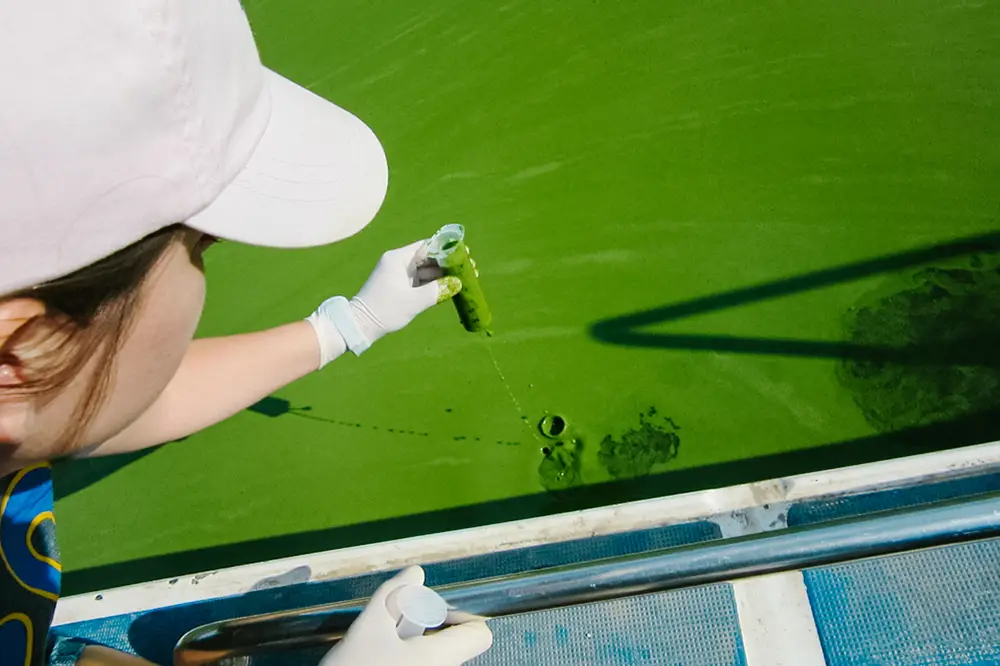
By analyzing data from two bloom events in Lake Taihu, China, the researchers found colonies had enriched Microcystis gene expression compared to other bacteria, taking on the functions bacteria would normally undertake. The dynamic resembles the Black Queen Hypothesis first described by UT graduate student J Jeffrey Morris and his doctoral advisor, microbiology Professor Erik Zinser. The theory of reductive evolution explains that gene loss can provide an advantage by conserving an organism’s resources.
“There may be an unseen role for bacteria, but we now know in the colony most of the work is being done by the cyanobacterium,” Wilhelm said.
The new study also showed viral infection strategies varied. Colony-associated cells expressed genes linked to lysogeny, a dormant viral state, which may confer immunity against superinfection. Solitary cells, however, showed increased signs of lytic infection, in which viruses actively replicate and destroy host cells. “These findings suggest that colony formation creates conditions favoring lysogeny, while single cells face stronger viral pressures,” Wilhelm said. “Seeing there is a specific morphology more commonly tied to one infection type versus another is novel and scientifically interesting.”
The study’s lead author, graduate student Xuhui Huang, came to Wilhelm’s lab at UT on a one-year Chinese Academy of Sciences scholarship. The co-authors include two UT PhD students who traveled to China with Wilhelm in 2018, as well as another UT graduate student, a postdoctoral researcher, and a research assistant professor.
“We are continuing to investigate the role of the microbiome in blooms,” Wilhelm said. That research includes collaborations with Morgan Steffen (PhD ’18), now an associate professor at James Madison University, and further investigation into lytic and lysogenic infection strategies.
“Cyanobacterial blooms dominated by Microcystis spp. are a global problem and present ecological challenges, such as toxin release and disruption of aquatic ecosystems,” Wilhelm said. The blooms have been increasing in frequency and severity, and unlocking the drivers and consequences of colony formation can play a key role in preventing or responding to them.