Medieval Insight for Modern Renaissance Thinkers
Medieval and Renaissance Studies dive into the past to unveil the big-picture foundations of modern culture across the globe.
The interdisciplinary Medieval and Renaissance Studies (MRST) program gives students an in-depth study of world events and cultures of the rich historical period stretching from 300 to 1700 CE.
The curriculum allows students and faculty to encounter the past in ways that build understanding of conditions that shaped today’s interconnected world. It also introduces students to different research fields and methods as they explore topic areas that excite them the most.
Majors and minors in MRST graduate with a multifaceted understanding of the Medieval and Renaissance worlds and with skills essential for the job market—sensitivity to cultural, linguistic, and historical differences and experiences in making sense of past times for our contemporary life. The program also offers a graduate-level certificate.
“As an interdisciplinary degree, we take pride in providing our students with a well-rounded education founded on the liberal arts tradition,” said Associate Professor Anne-Helene Miller, Riggsby Director of the Marco Institute for Medieval and Renaissance Studies and chair of the MRST program. “We feel it is our mission to support them in following their ambitions wherever this may take them.”
Engaging the Medieval Core
Faculty members from eight affiliated departments guide MRST courses on the architecture, art history, archaeology, history, literature and languages, music, religious studies, philosophy, and political science that developed in Europe, the Middle East, and the Mediterranean regions during these centuries.
Studies begin with core classes, Medieval Civilization I and II, that introduces students to the world of Medieval manuscripts and books.
“We engage mostly through deep readings of primary sources, which we then discuss and debate in class,” said MRST Teaching Associate Professor Michael Lovell. “One week might be spent on a very traditional medieval chronicle narrating basic political history, another week might dwell on a major Christian or Islamic philosopher’s or theologian’s writings. The week after that might dwell on Medieval fables and Renaissance short stories. Students find this variety of genres exciting, and it sparks their curiosity for all things Medieval and Renaissance evermore.”
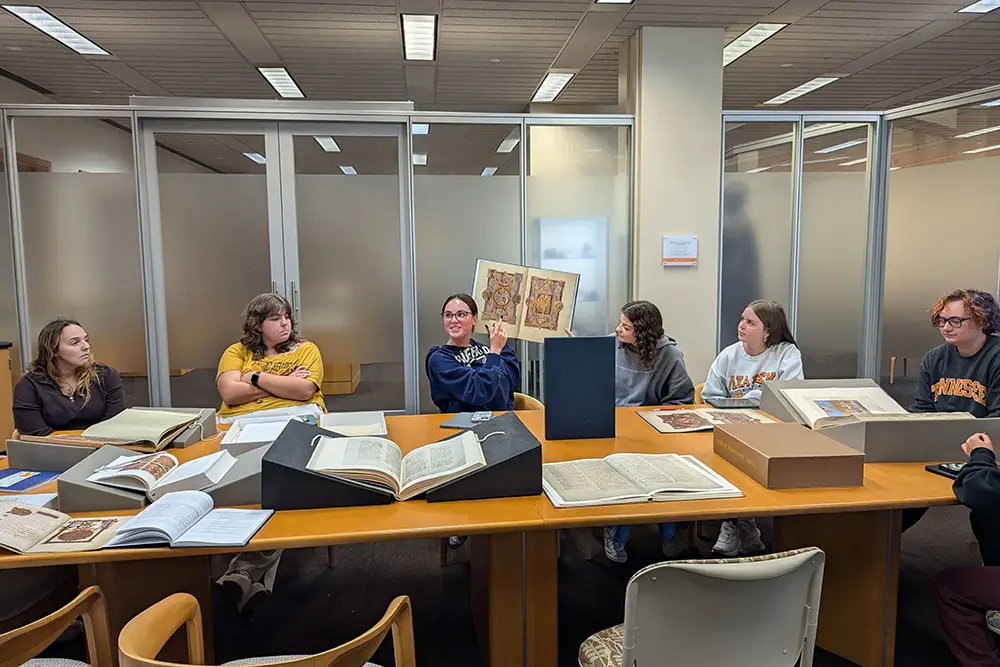
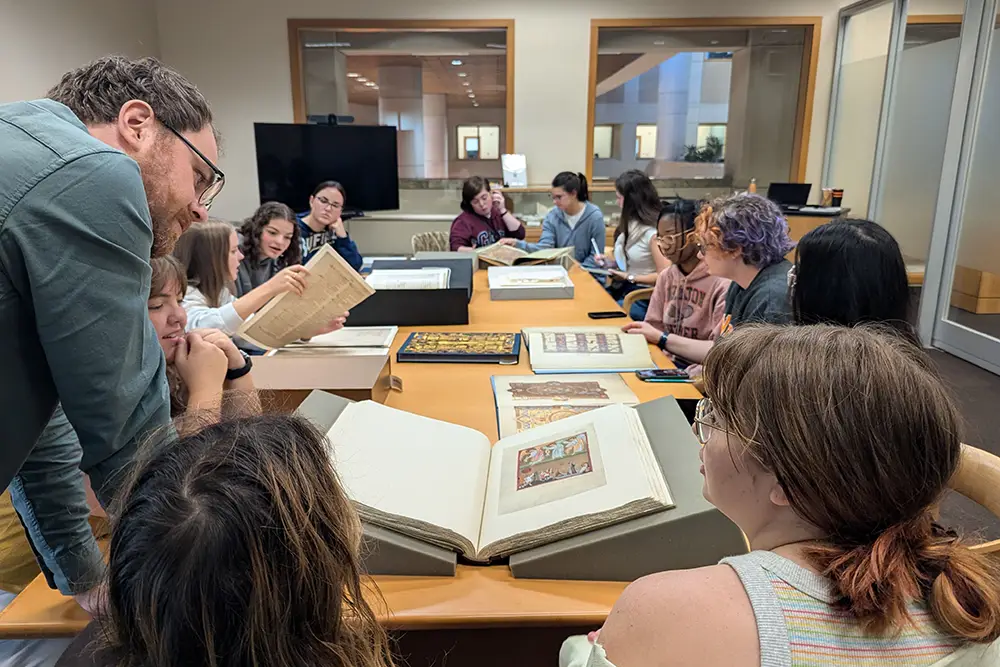
One popular part of the course is spent learning about the culture and history of the Middle Ages and the Renaissance through the cultural artifacts that still exist—and which are available to students on campus.
“One aspect of the courses that engages students the most is the week we spend each semester at Special Collections in Hodges Library,” said Lovell. “They have a wonderful collection of facsimiles of Medieval and Renaissance manuscripts, many of which are illuminated with beautiful imagery.”
Students get a hands-on lesson examining these, learning the ways that books were constructed and designed more than 500 years ago. They also get to see how a book that was copied by multiple scribes can reflect the conflicting values of scribes working on the same manuscript.
“One scribe copying a book from the Bible might be fine illustrating some graphic material, whereas a later scribe evidently censors the imagery,” said Lovell. “These sorts of things give students an immediate, concrete sense that premodern people were not homogenous, but rather just as complicated and varied as us moderns.”
Worldwide Recognition
The MRST program is coordinated through the Marco Institute, UT’s internationally acclaimed center for the study of the history and culture of the premodern world. The institute and program have grown in tandem over the years, with more faculty joining to bring students a high quality of programming. This growth and increased funding has helped bring a greater awareness for the campus community of Marco’s international reputation of excellence.
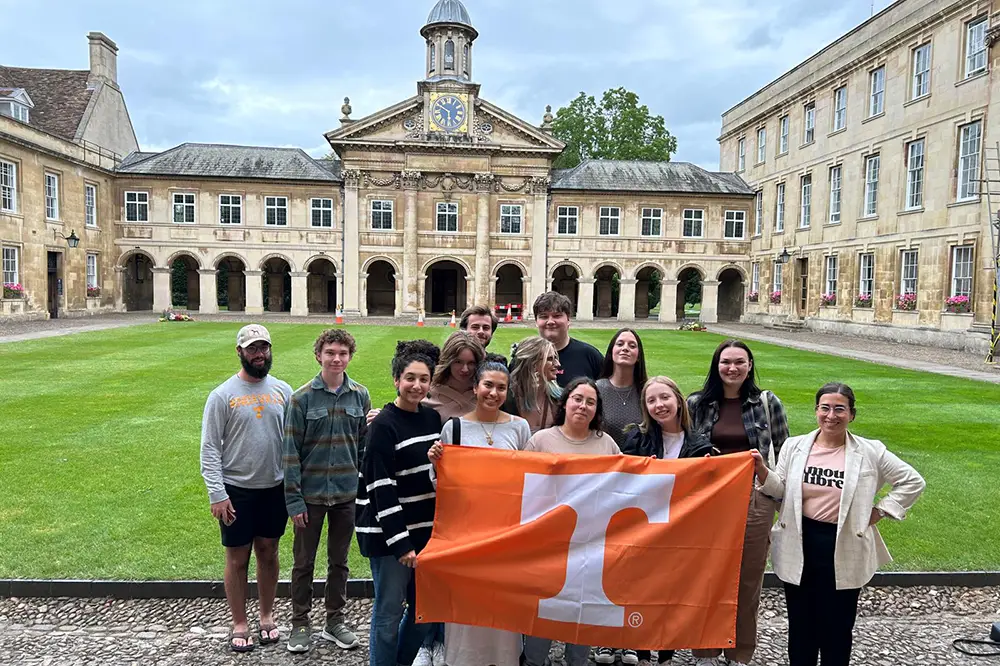
“We have a record of excellent placement for our students, at both undergraduate and graduate levels,” said Miller. “Our students pursue a variety of paths after completing their degrees with us. We are increasing our study abroad programing and language learning, which has been in steady demand among our students.”
by Randall Brown