
Scholar Spotlight: Sherwood Richers
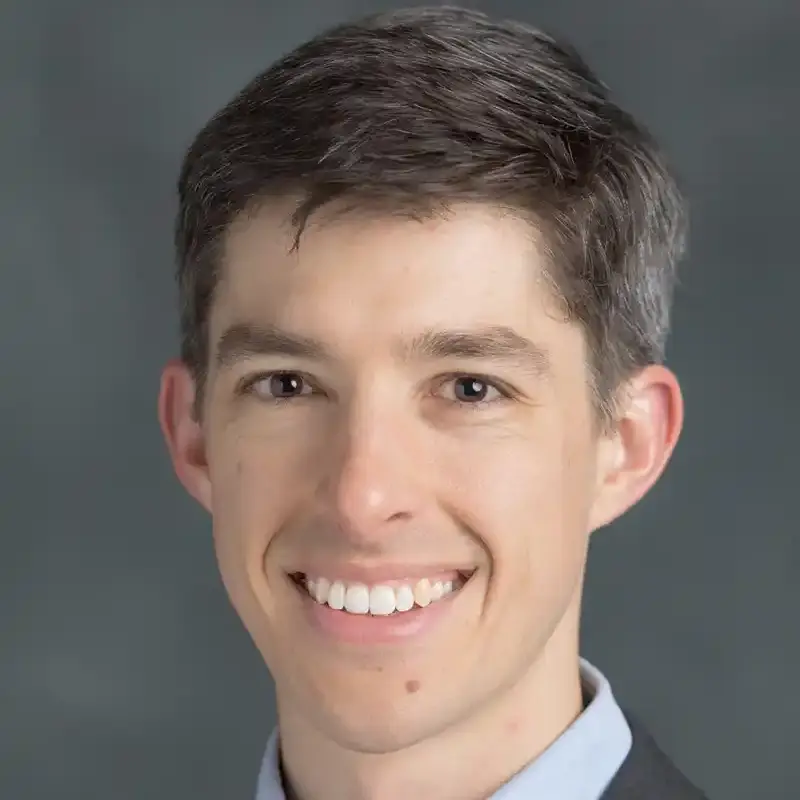
“I study some of the most energetic explosions in the universe—those caused by stars collapsing at the ends of their lives, and those resulting from the violent collisions of neutron stars. I focus on how neutrinos drive these explosions and determine how they enrich the universe with many types of elements.”
Sherwood Richers
Assistant Professor
Department of Physics and Astronomy
I use high-performance computing to simulate the nonlinear neutrino flavor instabilities in core-collapse supernovae and neutron star mergers. This includes particle-in-cell methods deployed on supercomputers for mean-field calculations and tensor network methods and quantum computing for many-body calculations.
In theoretical astrophysics new and creative ideas and novel calculations are coming out on a weekly basis, and hope is high that we, as a field, will be able to understand the nonlinear behavior of neutrinos in these explosive environments in coming years.
The problem is especially exciting because it is tied to a bunch of new physics (e.g., behavior of matter at high densities, dark matter, fundamental particle physics) and astrophysics (e.g., weird explosions being discovered in new telescopes, how the universe formed the elements we see today, simultaneous detections of gravitational waves + light + neutrinos).
Why I Do What I Do
I have been interested in astronomy since I was a child, inspired by colorful books about space and space exploration. I am fortunate to be carrying out my childhood dream.
I started my research in astrophysics working on accretion disks around black holes, but I had the opportunity to work on core-collapse supernovae. By the time I finished graduate school, I had done a good deal of work trying to understand how neutrinos carry energy in these systems, but I knew that the phenomenon of neutrino flavor change (and the associated instabilities) was a major hole in the theory of supernovae and mergers.
As a postdoctoral fellow I learned about neutrino flavor transformation, and since then I have focused on merging these theoretical flavor transformation phenomena with large-scale supernova and merger simulations that allow us to understand what goes on inside of these explosions.
Currently Working On
Graduate student Zoha Laraib and I have been working to merge the traditionally disparate fields of many-body (i.e., exact) and mean-field (i.e., approximate) neutrino physics. We developed a computational scheme using tensor networks that allows us to demonstrate that many-body effects can fundamentally change how neutrinos behave (what the many-body field has been arguing for a while), but that there are useful aspects of mean-field calculations that remain true in the many-body calculations.
This allows us to connect full simulations of astrophysical explosions all the way down to the detailed quantum mechanics of neutrinos and opens up a great deal of work making simulations accurate and predictive. (Read about their research in the journal Physical Review D.)