
21st-Century Storytelling
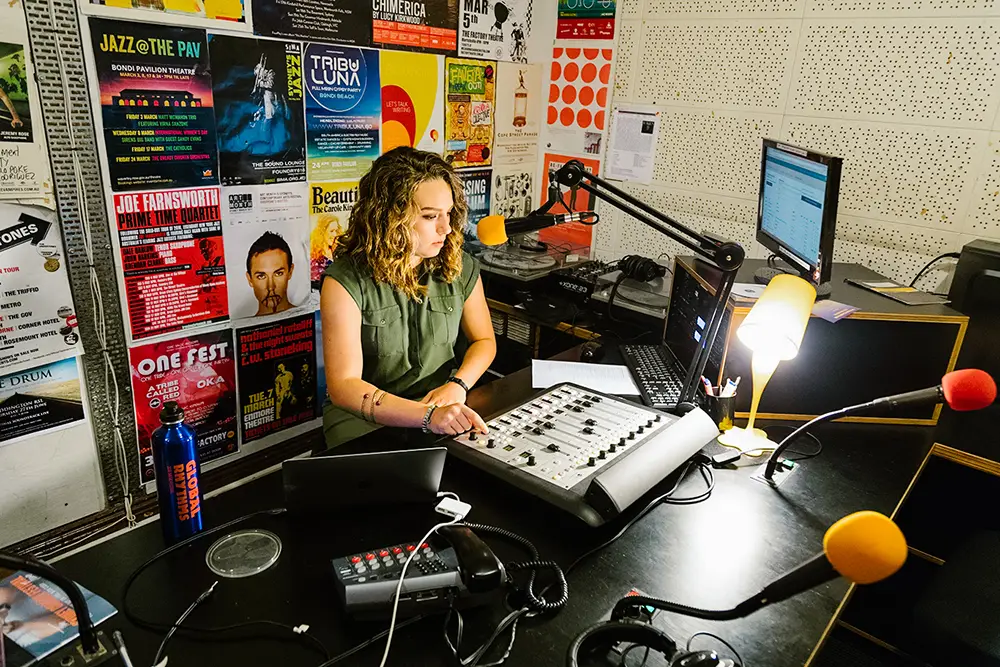
Vols learn to steer 21st century narratives through Visual and Interactive Storytelling.
Storytelling traditions drive the heartbeat of the shared human experience, from the age-old intimacy of campfire tales to today’s world-wide digital platforms. The recently launched Visual and Interactive Storytelling (VIS) program offers UT students a major that connects history and traditions with these latest methods and technologies. Courses from English, theater, art, filmmaking, and other areas combine to build a flexible and interdisciplinary foundation for exciting, contemporary career paths.
“There are all of these places where we tell stories and connect with each other that aren’t really served by one singular disciplinary track,” said Teaching Assistant Professor Jeffrey Amos, chair of the VIS program. “This program brings it together in a way for students to chart a pathway of their own inside these big sandboxes of different disciplines.”
The interdisciplinary VIS degree connects academic insights with experiences in interactive, creator-economy professions. Courses blend writing, visual art, performance, and digital technology for applications toward fields like podcasting, narrative game and media design, immersive virtual-reality experience creation, or interactive installations for museums and public spaces.
“If someone wants to be a comic-book artist, it helps to get art instruction,” said Amos. “If they want to parlay that into a digital space, it helps to get animation instruction. But they are also thinking about serial storytelling, so it wouldn’t hurt to learn about Victorian literature as well. Even though technology is changing the mediums through which we are telling stories, it’s still part of a rich human history.”
Vols Find Their Unique Voices While Building Professional Skills
VIS provides an environment for students to take a deep dive into the history and evolution of storytelling across fiction, theatre, poetry, film, and more. They gain knowledge in digital, multimodal, nonlinear, and other storytelling forms, plus a background in narrative techniques and tools and the roles these play in contemporary public life. Courses begin with an introduction to time-based art and the history of western art in conjunction with American, British, or other literary histories.
“The idea is that you are going to be telling stories, so let’s put you into some historical framework to understand where your work is fitting into this broader history,” said Amos. “That can be followed by creative writing or screenplay classes and then digital technology classes like animation, cinema and video art, and multimedia storytelling.”
After these core classes set the foundation, students can forge unique paths to follow their interests across disciplines.
“One of the core strengths of this program is its flexibility,” said Amos. “It allows students to discover along the way, ‘I didn’t think I was going to be interested in animation, but I’m really interested—and now I’m connecting that to this other thing, and I want to go explore more.’”
by Randall Brown